
Skip to content
SJF Plastering logo

Sutton, Surrey & South West London

Plasterboarding & Dry Lining

Boarding stud walls, ceilings and solid walls, then taping and skimming them flat — the modern way to create clean, straight surfaces quickly.

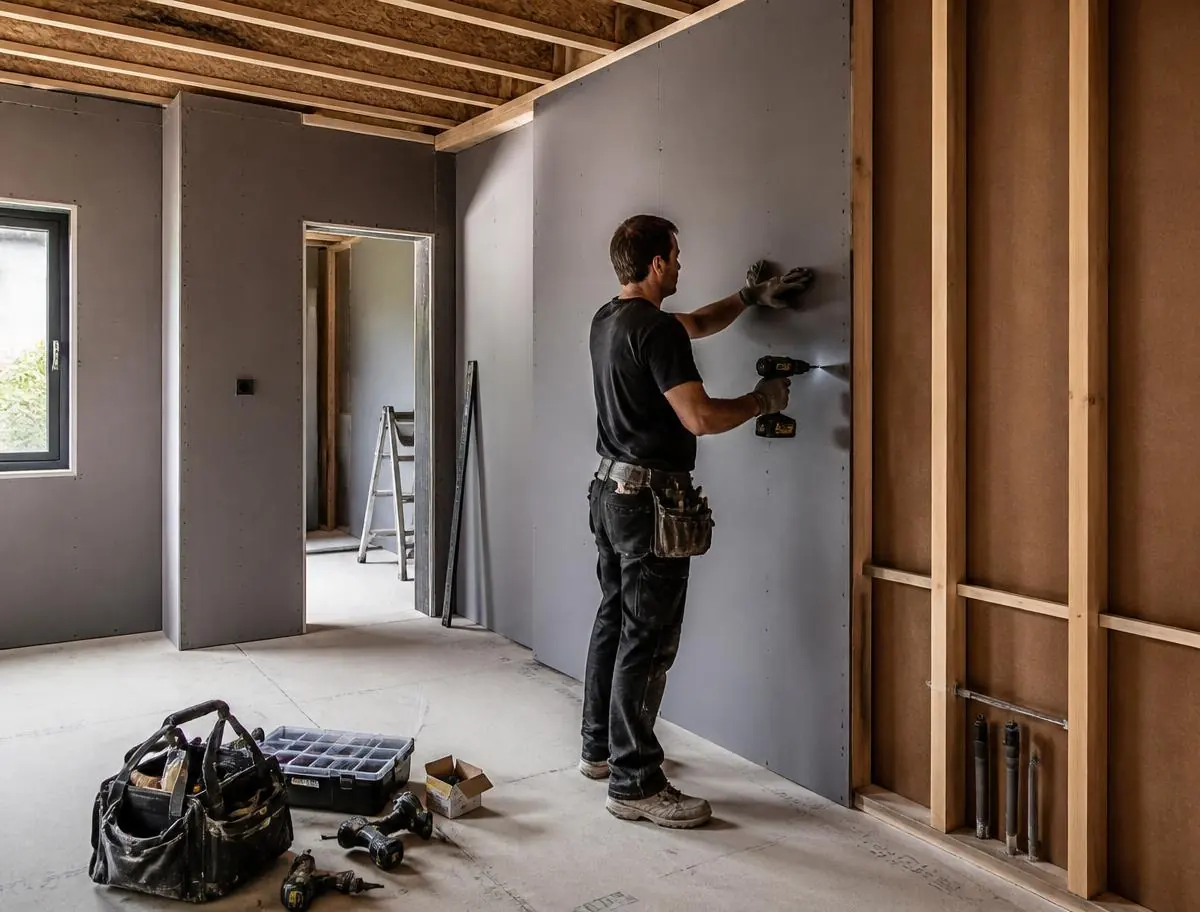
Plasterboarding is the fixing of plasterboard to timber studs, metal frames or ceiling joists. Dry lining is fixing board directly to a solid wall, usually with adhesive dabs. Both are then taped and skimmed to give a smooth finish. It is faster and far drier than traditional wet plastering, which makes it well suited to renovations.

Plasterboard being fixed to a timber stud wall during a home renovation

When plasterboarding is used

  • New stud partitions dividing or reconfiguring a room
  • Solid walls that are too uneven to be replastered economically
  • Ceilings being replaced or overboarded
  • Loft and garage conversions where everything is new work
  • Boxing in pipework, steels and awkward structural details
  • Where insulated or moisture-resistant board is required

What you can expect from SJF Plastering

  • Advice on whether boarding or replastering suits your wall
  • Neat cut-outs around sockets, switches and pipework
  • Beaded corners and reveals as standard
  • Offcuts and packaging removed, room left clear
  • A free quotation covering boarding and skimming together

The process

How the work is carried out

  1. 01

    Set out and check

    We check the wall or ceiling for level and plumb, and set out board runs to keep joints in sensible places.

  2. 02

    Fix the board

    Boards are screwed to studs and joists, or dot-and-dabbed to solid walls, cut neatly around sockets, switches and openings.

  3. 03

    Tape and bead

    Joints are scrimmed, internal angles taped and metal beads fixed to external corners and reveals for crisp, durable edges.

  4. 04

    Skim to finish

    The whole surface is skimmed with finish plaster and trowelled flat, ready for decorating.

Common problems

Issues this work solves

Very uneven walls

Where a wall is bowed or heavily patched, boarding over it gives a straight surface far more reliably than building up plaster.

Visible joints

Poorly finished earlier boarding often shows tape lines through paint. Skimming the full surface removes them for good.

Damaged corners

Unbeaded external angles chip easily. We fit proper beads so corners stay straight and take knocks.

Dot and dab versus battens

Board can be stuck to a solid wall with adhesive dabs, or fixed to timber battens. Dabs are quick and lose the least room space. Battens are useful where the wall is very irregular, where a service void is wanted, or where the wall has a history of damp and the board should not sit tight against it.

We will recommend one after looking at the wall rather than defaulting to whichever is quicker.

Boarding ceilings

Ceilings are boarded either as new work or as overboarding over an existing ceiling that is tired but structurally fine. Overboarding is common in older properties around Sutton and Wimbledon: it avoids the mess of pulling an old lath and plaster ceiling down and gives a clean base to skim.

Board is fixed to the joists at correct centres so the ceiling stays flat and does not sag between fixings.

Damp must be dealt with first

Boarding over a damp wall hides the symptom and makes the underlying problem worse, because the moisture is trapped behind an unventilated surface. If we see signs of damp we will say so, and recommend the cause is resolved before any boarding is carried out.

Frequently asked questions

Does plasterboard need to be skimmed?
For a smooth painted finish, yes. Board can be taped and jointed instead, but a full skim gives a flatter, more consistent surface and is the standard finish in most homes.
How much room space does dry lining take?
Dot-and-dab typically loses around 25–35mm from each dry-lined wall including the board and adhesive. Battened or insulated systems take more.
Can you board a bathroom or kitchen?
Yes. Moisture-resistant board is used in wet areas, and we will discuss whether tile backer board is more appropriate where heavy tiling is planned.
Can you build a new stud wall as well as board it?
Tell us what you are planning when you call on 07967 302162 and we will confirm what we can take on and where another trade may be needed.

Get a free plastering quotation

Tell us what needs doing and we will give you an honest price. Photographs by WhatsApp are often enough to get started.

Call nowWhatsAppEmail